Illinois School Cell Phone Ban: What School Districts Need to Know

30 Jul 2026 5 min read
Amanda Bruns
Amanda Bruns
Member Engagement Manager, Learning Technology Center

Note: This blog is provided for informational purposes only and does not constitute legal advice by the Learning Technology Center. School districts should consult with their own legal counsel when certifying compliance with new or current legal mandates.

“Put that phone away!”

You may soon be hearing a lot less of that in Illinois classrooms, following the recent passage of SB 2427 (colloquially known as the school cell phone ban). Signed by Gov. JB Pritzker in July, this new law requires Illinois school districts to implement policies that limit cell phone usage during instructional time.

Now that this much-anticipated law is signed, sealed, and delivered, school leaders must begin developing wireless device policies that achieve compliance while balancing student well-being, educational outcomes, and operational considerations.

This isn’t a one-size-fits-all situation, though. While the law establishes statewide expectations, it also provides districts with the flexibility necessary to develop locally appropriate policies. 

As your district starts updating its cell phone policy, here’s what you need to know to lead a successful and cost-effective implementation:

Understanding Illinois' New School Cell Phone Law

What the Law Requires

At its core, SB 2427 mandates K-12 school districts in Illinois adopt a “bell-to-bell” cell phone ban. These policies must cover all “school time”, which the law defines as any instructional time as well as “recess, lunch, and passing periods.”

Cell phones aren’t the only target, either. Illinois schools will need to limit student use of any “wireless communication devices” during the school day.

Tablets, laptops, gaming devices, wearables (such as smart watches) and any digital device with Internet access or messaging capabilities must all fall under these newly mandated policies.

Once a wireless communication device policy has been established, districts must post the policy on their publically-accessible website. Additionally, annual notice of the policy must be provided to:

      • Parent and guardians
      • School personnel (including new employees and substitute teachers)

What’s Not Covered

Importantly, this law does not require school districts to restrict or otherwise prohibit use of “any device that a school district or teacher has directly issued to, provided for, or required a student to possess and use for educational purposes.”

In other words – school-issued devices are exempt from coverage under these mandated policies (though schools can still establish and enforce policies regarding when, where, and how school-issued devices are used).

Not a Statewide Ban

Another key distinction: this law does not establish a statewide ban on cell phone use in schools.

Districts retain local control over how devices may be used outside instructional periods, including lunch, recess, passing periods, extracurricular activities, and other designated times.

Local leaders also remain in control of choosing how to implement their device management policy, including whether to utilize a secure storage solution.

When the Law Comes into Force

Each school district will need to adopt and implement a wireless communication device policy before the beginning of the 2027-2028 school year.

If a district already has a comparable device limitation policy in place, they can keep that policy in place through the 2030-2031 school year. At that time, districts will need to update their policy to fully conform with SB 2427’s standards.

Required Exceptions and Student Accommodations

While SB 2427 restricts device use during instructional time, it also recognizes situations where access to a device may be necessary for educational purposes or student health or safety.

To accommodate these situations, district wireless communication device policies must include exceptions that cover:

      • Students whose health or safety needs require device access, as documented by a licensed medical professional
      • Students with accommodations outlined in an Individualized Education Program (IEP) or Section 504 plan
      • Emergency situations
      • Educational activities authorized by school personnel

District leaders should work closely with special education teams, school nurses, administrators, and legal counsel to ensure policies are implemented consistently and equitably.

Implementation Considerations for School Districts

Successfully implementing a compliant wireless communication device policy requires more than adopting board policy language. 

Districts should begin evaluating operational and logistical considerations that’ll influence how their policy functions, including:

Policy Parameters

Regardless of specific wording, each policy should clearly define:

      • Instructional versus non-instructional time
      • Device storage expectations
      • Procedures for policy violations
      • Family communication protocols
      • Staff responsibilities
      • Accommodation procedures

Community Engagement

Stakeholder communication will be essential for a successful policy rollout.

Parents, students, teachers, and support staff should understand:

      • Why the policy is being implemented
      • How it supports student learning
      • What exceptions exist
      • How emergency communication will be handled

Budgetary Constraints

SB 2427 is an unfunded mandate, which places the financial burden for policy implementation on local school budgets.

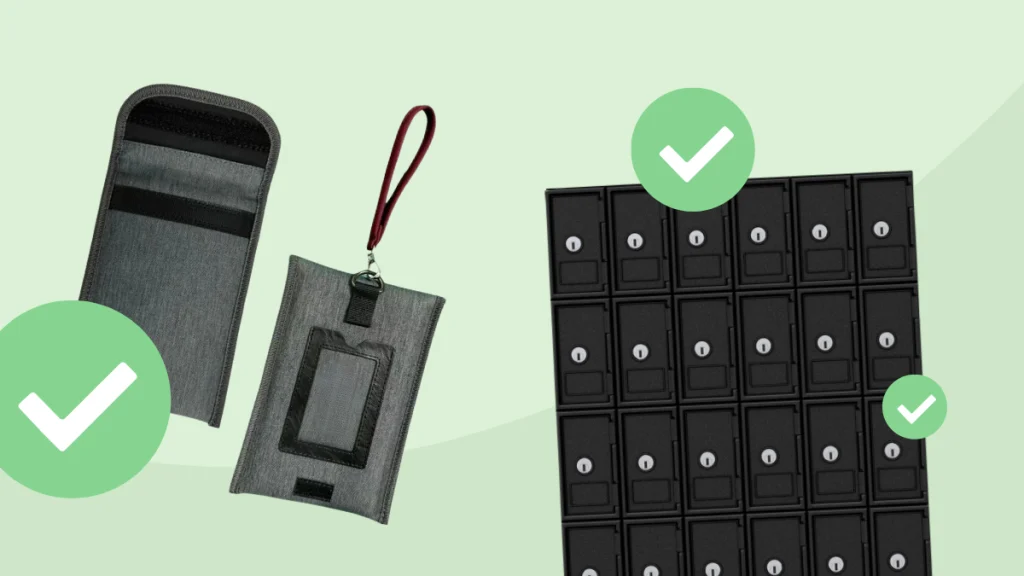
For most districts, the primary direct cost associated with these policies will be the provision of “secure and accessible storage” for covered devices. District leaders will face a strategic decision when choosing a storage solution; whether to opt for a lower initial capital expenditure or a solution with managed long-term operational costs.

When selecting storage solutions, a cost-benefit analysis can inform eventual budgetary decisions. We’ve taken a closer look at two popular options: secure pouches and secure lockers →

Looking Ahead

SB 2427’s passage marks a significant change in Illinois education policy and reflects a growing emphasis on reducing classroom distractions while supporting student learning and well-being.

As districts prepare for implementation, success will depend on thoughtful planning, clear communication, and selecting operational strategies that align with local goals and community expectations.

By taking a proactive approach now, school leaders can transform a compliance requirement into an opportunity to strengthen student engagement and support a positive learning environment – one fewer cell phone at a time.

Amanda Bruns
Amanda Bruns
Member Engagement Manager, Learning Technology Center

Amanda leads LTC Purchasing Program's member engagement by driving membership growth and support through strategic programs and statewide outreach, ensuring schools across Illinois realize substantial financial benefits.